How to Design for Laser Cutting: 10 Mistakes to Avoid
Emery Laser is a Gold Coast-based laser cutting and fabrication business, providing precision components for manufacturing clients across Queensland and Northern New South Wales. We specialise in quick turnaround, high-quality cutting and folding solutions backed by ISO 9001-certified systems.
Introduction
Laser cutting is a mainstay in Australian manufacturing, valued for its precision, speed, and adaptability across stainless steel, aluminium, and carbon steel projects. Yet, even experienced engineers and designers can make simple errors that impact finished components—leading to increased costs, poor edge quality, or unnecessary production delays. Avoiding these common mistakes will elevate the outcome of your next project.
1. Supplying Incorrect File Formats
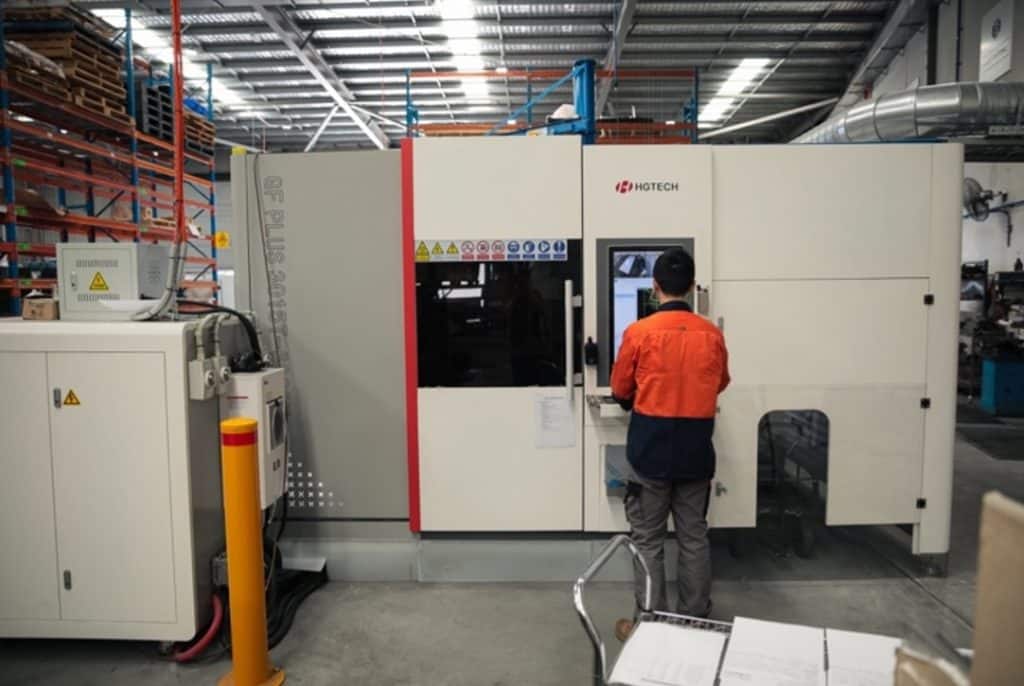
File preparation is critical. Most modern laser cutters require vector-based formats such as DXF or DWG. Supplying incompatible files (raster images, PDFs, etc.) leads to wasted time converting and potential errors in conversion, affecting the final cut accuracy. Always clarify the required format with your supplier and check for embedded fonts, layers, and scaling issues before submission.cambridge
2.Forgetting to Allow for Kerf
The kerf is the width of material removed by the laser. Neglecting this allowance often results in parts that are too tight or loose when assembled. For best results, confirm the kerf size (which varies with material and laser type) and adjust designs accordingly—particularly for slots, tabs, and press-fit assemblies.mfr.edp-open+1
3.Insufficient Part Spacing
Too little space between components on the sheet can lead to material warping, poor edge quality, or fused parts. Best practice is to space each part by at least the material thickness, or as specified by your supplier—a guideline confirmed by process parameter optimisation studies.mdpi+1
4.Overly Intricate or Small Features
Ultra-fine detail is tempting but can compromise cut quality. Small holes, narrow bridges, and sharp curves may burn away, distort, or fail entirely, especially in thicker metals. Balance creativity with manufacturing limits and confirm minimum feature sizes based on both material and laser capabilities.mfr.edp-open+1
5.Unsupported Cutouts and Weak Sections
Long, narrow sections or ‘floating’ internal cutouts may bend, distort or break free during cutting or handling. Designs should avoid unsupported spans and include adequate material around cutouts—particularly in folded or stress-bearing parts. Structural analysis and hands-on trials both confirm the risk.mfr.edp-open
6.Inaccurate Tolerances
Laser cutting delivers high repeatability, but imprecise or ambiguous tolerances undermine results. Over-tolerancing increases costs; under-tolerancing leads to assembly issues. Specify only what’s crucial, match tolerances to both process capability and application, and confirm with your fabricator.mdpi
7.Choosing the Wrong Material
Material choice—across stainless, aluminium, and carbon steel—directly affects edge quality, cut speed, and cost. Some materials are better suited for laser cutting due to their reflectivity, thermal conductivity, and hardness. For example, aluminium cuts faster but may have a rougher edge than stainless steel, while carbon steel offers a clean budget-friendly result. Consult material data sheets and your supplier when in doubt.mdpi+1
8.Neglecting Clean Folds and Bend Radii
When combining laser cutting with folding, ignore either the minimum bend radius or grain direction and you risk cracks or poor folds. Fold lines should be indicated clearly on files, and the minimum bend radius must be based on material type and thickness.mfr.edp-open
9.Overlooking Part Numbering and Tabs
Missed or ambiguous part numbers, matching marks, or handling tabs result in confusion and rework. Laser-etched markings, if properly designed, help maintain identification from cutting to assembly and are easily integrated into the design file.cambridge
10.Poor Communication with Your Supplier
Even well-designed parts can run into trouble without clear dialogue. Share all relevant specifications: material grade, finish, quantities, and inspection requirements. Good communication shortens lead times and avoids unnecessary revisions.cambridge
Enhancing Folding Accuracy with Emery Laser’s Press Brake
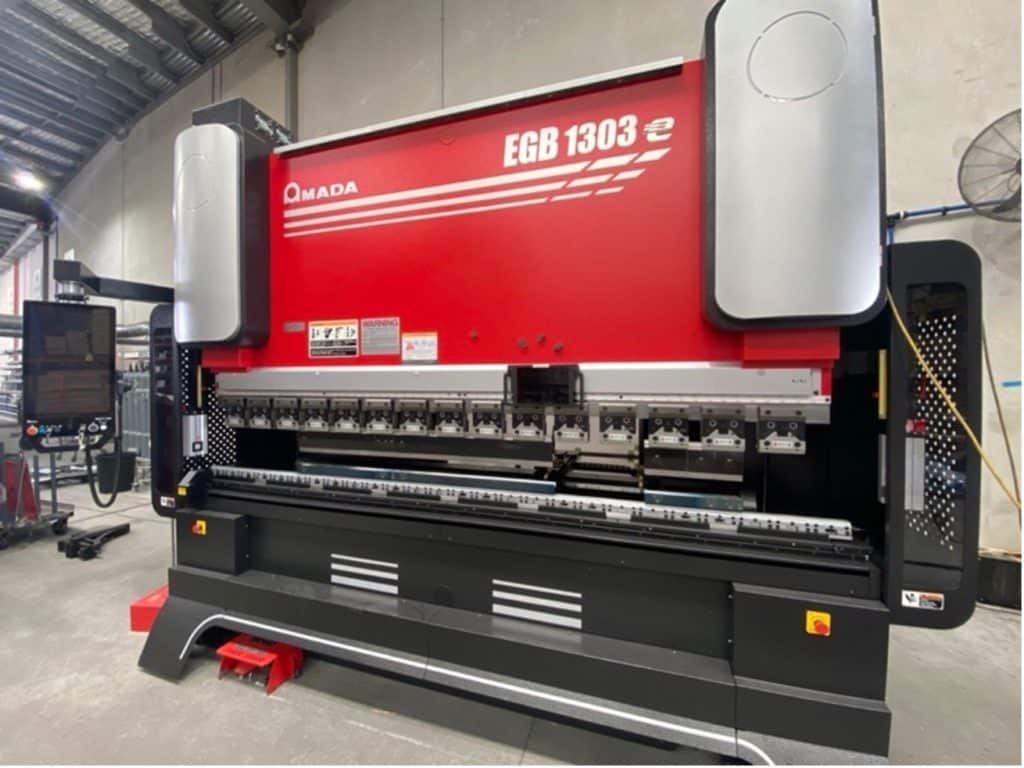
Emery Laser’s investment in the new AMADA EGB-e servo-electric press brake significantly boosts folding precision, energy efficiency, and production speed. This advanced equipment delivers consistent, repeatable bends—minimising scrap and maximising value for Queensland and Northern NSW manufacturers.
For expertise in cutting and folding contact Emery Laser today via https://emerylaser.com.au/contact-us
References
- Modelling and optimisation of laser cutting operations: M. Dhananchezian et al., MATEC Web of Conferences 34, 05001 (2015).mfr.edp-open
- Effect of fibre-laser parameters on cutting accuracy: F. Saboori et al., Materials 17, 13 (2024).mdpi
- From hand-drawn sketching to laser cutting: Cambridge University Press, 2019.cambridge
- https://ieeexplore.ieee.org/document/10687106/
- http://link.springer.com/10.1007/s11740-017-0718-7
- https://www.semanticscholar.org/paper/23bae83c6663fd7ab09157cc9ab2b0363d99ef3b
- https://www.spiedigitallibrary.org/conference-proceedings-of-spie/12878/3000190/Design-of-a-processing-head-for-AI-optimized-welding-and/10.1117/12.3000190.full
- http://idildergisi.com/makale/pdf/1480559468.pdf
- https://ieeexplore.ieee.org/document/10933983/
- https://pubs.aip.org/jla/article/35/4/042015/2911854/Approach-toward-the-application-of-mobile-robots
- https://dl.acm.org/doi/10.1145/3544548.3580684
- https://www.semanticscholar.org/paper/d272c32afecb3e5f8f9f1f909c7cf1245934962b
- https://www.cambridge.org/core/product/identifier/S2220434219000374/type/journal_article
- https://www.mdpi.com/2072-666X/14/10/1843/pdf?version=1695808235
- https://www.mdpi.com/2075-1702/13/5/339
- https://mfr.edp-open.org/articles/mfreview/pdf/2015/01/mfreview150022.pdf
- https://www.mdpi.com/2076-3417/10/7/2416/pdf
- https://www.mdpi.com/1996-1944/12/1/157/pdf
- https://pmc.ncbi.nlm.nih.gov/articles/PMC6337310/
- https://www.mdpi.com/2504-4494/5/3/74/pdf?version=1625629985
- https://www.mdpi.com/2075-4701/14/6/723/pdf?version=1718713358